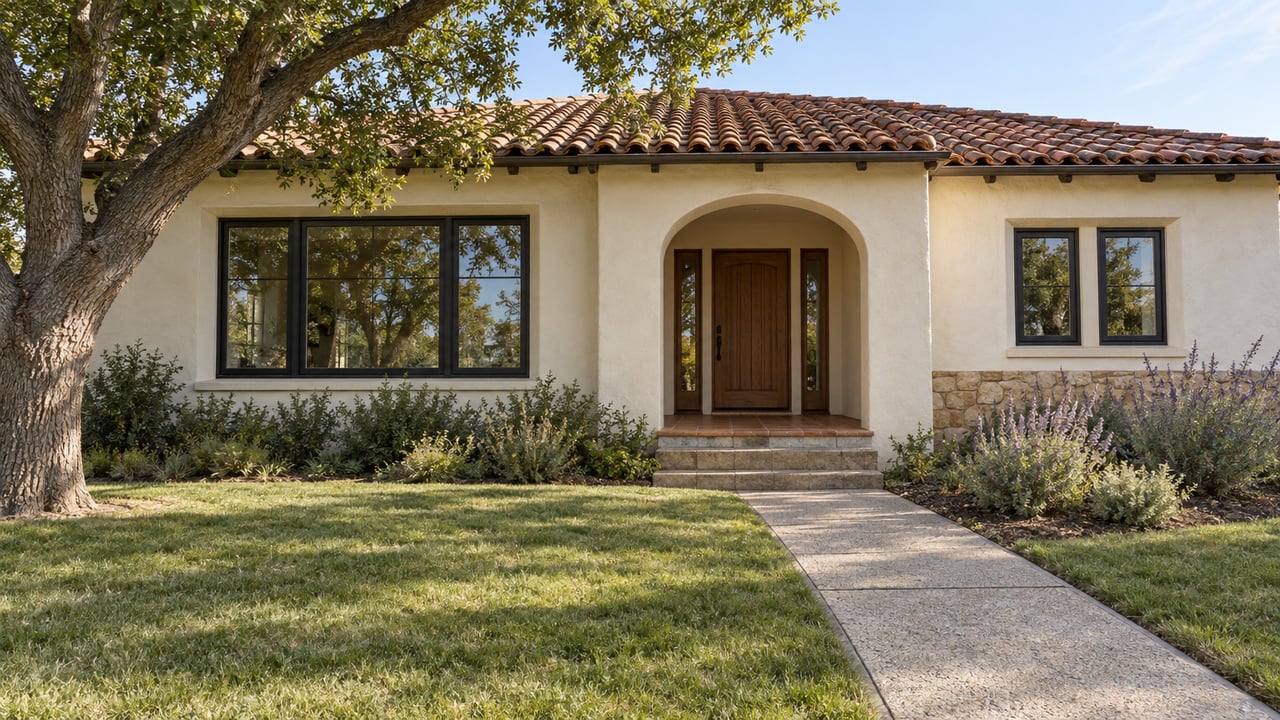
In September 2026, the average single-family home that sold in San Jose's 95125 ZIP code closed at $2,268,305. That's $31,695 below the price where San Jose's Measure E transfer tax starts. Measure E was sold to voters in 2020 as a tax on high-end property sales. In Willow Glen today, the line sits about one good bidding war above the typical house.
One dollar over the line adds $17,250 in Measure E
Since July 1, 2025, the Santa Clara County Clerk-Recorder has collected San Jose's Real Property Transfer Tax on any sale inside city limits where the price is above $2,300,000. The rate is charged on the whole price, not just the amount above the threshold. The county's own Measure E page gives the example that an $11 million sale pays 1.5% on all $11 million, which comes to $165,000.
The tiers are:
- $2,300,000.01 to $5,000,000: 0.75%
- $5,000,000.01 to $10,000,000: 1%
- Over $10,000,000: 1.5%
Measure E sits on top of two transfer taxes that a San Jose sale already pays unless an exemption applies. The county charges $0.55 per $500 of price or fractional portion, which works out to $1.10 per $1,000, and San Jose's base conveyance tax adds $1.65 per $500, or $3.30 per $1,000. Those two rise in small steps as the price goes up. Measure E jumps all at once. Here's what the three add up to at a few prices around the line:
| Sale price | County tax | San Jose base tax | Measure E | Total transfer taxes |
|---|---|---|---|---|
| $2,250,000 | $2,475 | $7,425 | $0 | $9,900 |
| $2,300,000 | $2,530 | $7,590 | $0 | $10,120 |
| $2,300,001 | $2,530.55 | $7,591.65 | $17,250.01 | $27,372.21 |
| $2,400,000 | $2,640 | $7,920 | $18,000 | $28,560 |
Moving from the second row to the third adds one dollar to the price and about $17,252 to the combined transfer-tax bill, nearly all of it Measure E.
The line moved up, and so did the typical house
At first the cliff sat at $2,000,000. The ordinance builds in an automatic inflation adjustment every five years, which is how it reached $2.3 million in July 2025. The trouble is that the single-family medians in several San Jose ZIP codes have also climbed to just below it. Here are the September 2026 MLS figures:
| ZIP | Area it's often associated with | Single-family median, Sept 2026 |
|---|---|---|
| 95125 | Willow Glen | $2,094,000 |
| 95120 | Almaden Valley | $2,034,248 |
| 95124 | Cambrian | $2,003,500 |
| 95129 | West San Jose | $2,820,000 |
Citywide, the September 2026 single-family median was $1,568,888, so most San Jose house sales are still well clear of Measure E. The ZIP figures show where that stops being true. In 95129 the median house is already past the line, so the tax is simply part of the deal there. In 95125, 95120 and 95124, the median sits $200,000 to $300,000 below the line, and Willow Glen's average is within about $32,000 of it. In those three ZIPs, a sale only slightly above the typical price can land near the line, and one round of overbidding can carry it across.
In 95125, homes sold at a 101% sale-to-list ratio in September 2026, with a median of 15 days on market. In a market where houses routinely sell at or above list price, a home listed at $2.25 million can end up over the line through ordinary competition.
The break-even price sits around $17,500 above the line
Picture a seller who pays every transfer tax on the sale. At $2,300,000 they keep about $2,289,880 after county and city transfer taxes. Above the line, all three taxes together take about 1.19% of the price. To keep that same $2,289,880, the sale would have to close at roughly $2,317,500. Any accepted offer between $2,300,001 and about $2,317,000 leaves that seller with less than a $2,300,000 sale would have.
How that plays out depends on who pays what, and that's set by local custom and the contract, not fixed by law. Old Republic Title's Bay Area closing-cost guide lists the county documentary transfer tax as customarily paid by the seller in Santa Clara County and city transfer taxes as customarily split between buyer and seller. The guide says those allocations are negotiable. It's dated January 2024, which is before the threshold moved to $2.3 million. San Jose's municipal code also makes the transferor and transferee jointly and severally liable for Measure E. Splitting the cost by custom at closing doesn't change who is legally on the hook.
There's no published San Jose study showing sales bunching just under $2.3 million. The closest comparison is Los Angeles. A UCLA Anderson-hosted paper on that city's Measure ULA transfer tax found a pile-up of sales just below its threshold. The $4.95 million to $5 million price range had 47% more transactions than the first taxable range above it. The paper also estimated a 23.5% drop in sales relative to comparison areas, with more high-end owners choosing to remodel rather than sell. ULA is a different tax with a much higher threshold in a different market. Still, it shows a full-price cliff changing behavior once enough sales sit near it.
The June headline about Measure E disappearing is out of date
If you followed this in early summer, you may have read that the tax was about to go away. A San José Spotlight report from June 14, 2026 described a Howard Jarvis Taxpayers Association initiative headed for the November ballot. It would have limited transfer taxes and applied retroactively, which would have nullified Measure E. The Mercury News later reported that San Jose feared losing more than $100 million a year under that version. City budget estimates have put annual Measure E revenue closer to $55 million.
That initiative isn't on the ballot. Its proponent withdrew it on June 25, 2026, under a last-minute deal at the state capitol. CalMatters summed up the replacement this way:
"The final deal puts a stripped-down tax-cut measure to voters in November but doesn't touch real-estate transfer taxes."
That replacement is Proposition 43. According to the official voter guide, it raises the vote needed to pass voter-proposed local special taxes from a simple majority to two-thirds, starting January 1, 2027. The Legislative Analyst's Office describes it as applying going forward, to new, increased or extended taxes. Voters decide it on November 3. Whichever way that vote goes, Measure E's threshold, tiers and full-price rule stay as they are now.
The fight over Measure E has really been about how the money is spent. In June 2025, the City Council adopted an allocation for 2025–26 and 2026–27 that sends most of the revenue to interim shelter, shelter operations and outreach, with smaller shares for homelessness prevention and affordable housing. None of that changes what a buyer or seller pays at closing.
A San Jose address doesn't always mean a San Jose sale
Measure E applies only to property inside the City of San Jose. Mailing addresses and ZIP codes don't follow city limits. Santa Clara County still has unincorporated pockets, which Santa Clara LAFCO calls islands. These are areas within a city's urban service area that stay under county land-use authority even when a city surrounds them. That's also why the ZIP medians above aren't clean city figures. A Cambrian or Almaden ZIP can include parcels that aren't in San Jose at all.
For any property priced near $2.3 million, these public tools show which jurisdiction a parcel is in:
- The County's Unincorporated Areas dataset, which the Planning Office maintains for LAFCO and last updated on October 17, 2026.
- The County's boundary maps and Property Explorer, which let you look up jurisdiction parcel by parcel.
- San Jose's annexation dataset, which the city publishes weekly and which tracks areas that have joined or left the city. Its latest update was October 16, 2026.
Your escrow officer will confirm which city transfer taxes apply. It's better to know before you write a list price or an offer than to find out when the estimated settlement statement arrives.
FAQ
Does Measure E apply to condos and townhomes? The county applies it to each transfer of real property in the city above the threshold, whatever the property type. In practice it rarely comes up for attached homes in these areas. The September 2026 median for condos and townhomes in 95125 was $1,234,000.
When does the threshold change again? The ordinance calls for an inflation adjustment every five years, and the current $2.3 million figure took effect July 1, 2025. That puts the next scheduled adjustment in 2030. The new amount hasn't been set.
Who do I ask about a specific transfer? The county directs Measure E questions to the City of San Jose's Department of Finance, Revenue Management.
This post is general information, not legal, tax or financial advice. Tax rules and how costs get split can depend on your contract and your situation, so please check the details with your escrow officer, a tax professional or an attorney before you act on them.
If your home's value is somewhere near $2.3 million, it helps to know which side of the line it's likely to land on before you list. Homes by Brianna will run your numbers against current sales in your ZIP so you can set your list price knowing where the line is. Get your free home valuation and we'll go through it together.